Tuesday, December 15, 2015

Langston Hughes, the Shakespeare of Harlem

Let America Be America Again

Let America be America again.
Let it be the dream it used to be.
Let it be the pioneer on the plain
Seeking a home where he himself is free.

(America never was America to me.)

Let America be the dream the dreamers dreamed—
Let it be that great strong land of love
Where never kings connive nor tyrants scheme
That any man be crushed by one above.

(It never was America to me.)

O, let my land be a land where Liberty
Is crowned with no false patriotic wreath,
But opportunity is real, and life is free,
Equality is in the air we breathe.

(There’s never been equality for me,
Nor freedom in this “homeland of the free.”)

Say, who are you that mumbles in the dark? 
And who are you that draws your veil across the stars?

I am the poor white, fooled and pushed apart,
I am the Negro bearing slavery’s scars.
I am the red man driven from the land,
I am the immigrant clutching the hope I seek—
And finding only the same old stupid plan
Of dog eat dog, of mighty crush the weak.

I am the young man, full of strength and hope,
Tangled in that ancient endless chain
Of profit, power, gain, of grab the land!
Of grab the gold! Of grab the ways of satisfying need!
Of work the men! Of take the pay!
Of owning everything for one’s own greed!

I am the farmer, bondsman to the soil.
I am the worker sold to the machine.
I am the Negro, servant to you all.
I am the people, humble, hungry, mean—
Hungry yet today despite the dream.
Beaten yet today—O, Pioneers!
I am the man who never got ahead,
The poorest worker bartered through the years.

Yet I’m the one who dreamt our basic dream
In the Old World while still a serf of kings,
Who dreamt a dream so strong, so brave, so true,
That even yet its mighty daring sings
In every brick and stone, in every furrow turned
That’s made America the land it has become.
O, I’m the man who sailed those early seas
In search of what I meant to be my home—
For I’m the one who left dark Ireland’s shore,
And Poland’s plain, and England’s grassy lea,
And torn from Black Africa’s strand I came
To build a “homeland of the free.”

The free?

Who said the free?  Not me?
Surely not me?  The millions on relief today?
The millions shot down when we strike?
The millions who have nothing for our pay?
For all the dreams we’ve dreamed
And all the songs we’ve sung
And all the hopes we’ve held
And all the flags we’ve hung,
The millions who have nothing for our pay—
Except the dream that’s almost dead today.

O, let America be America again—
The land that never has been yet—
And yet must be—the land where every man is free.
The land that’s mine—the poor man’s, Indian’s, Negro’s, ME—
Who made America,
Whose sweat and blood, whose faith and pain,
Whose hand at the foundry, whose plow in the rain,
Must bring back our mighty dream again.

Sure, call me any ugly name you choose—
The steel of freedom does not stain.
From those who live like leeches on the people’s lives,
We must take back our land again,
America!

O, yes,
I say it plain,
America never was America to me,
And yet I swear this oath—
America will be!

Out of the rack and ruin of our gangster death,
The rape and rot of graft, and stealth, and lies,
We, the people, must redeem
The land, the mines, the plants, the rivers.
The mountains and the endless plain—
All, all the stretch of these great green states—
And make America again!
What a great poem to end on. Langston Hughes is a staple that holds our history together. He has fought for many of the rights that we value today. In this poem he's exclaiming that America needs to be America again. He knows what foundation this country is built on, as he sees the world around him he realizes that we have lost our way. America was built on great values and sometimes we loose sight of them. The US was created to fight the tyrant King of England who oppressed us at every turn. In the Declaration of Independence its stated: "That to secure these rights, Governments are instituted among Men, deriving their just powers from the consent of the governed, --That whenever any Form of Government becomes destructive of these ends, it is the Right of the People to alter or to abolish it, and to institute new Government, laying its foundation on such principles and organizing its powers in such form, as to them shall seem most likely to effect their Safety and Happiness."   This the very idea this country was founded on, if we don't like what we see, its our duty make change. This was what Langston tried to do and even wrote the poem above about it. He knew that we could be more, we must change because the second we stop changing we begin our destruction. It is our duty as citizens of these great states to change for the better.
Link to Poem: https://www.poets.org/poetsorg/poem/let-america-be-america-again

Monday, December 14, 2015

Henry Wadsworth Longfellow, A National Treasure


The Tide Rises, The Tide Falls


The tide rises, the tide falls,
The twilight darkens, the curlew calls;
Along the sea-sands damp and brown
The traveller hastens toward the town,
      And the tide rises, the tide falls.

Darkness settles on roofs and walls,
But the sea, the sea in the darkness calls;
The little waves, with their soft, white hands,
Efface the footprints in the sands,
      And the tide rises, the tide falls.

The morning breaks; the steeds in their stalls
Stamp and neigh, as the hostler calls;
The day returns, but nevermore
Returns the traveller to the shore,
      And the tide rises, the tide falls.

What a dark mysterious poem. The poem really brings on the feeling that death is inevitable no matter what we try to do to stop it. It feels to me that the poem starts very warm and beautiful and slowly becomes darker and slower as its read. You can really tell that he writes about what he is feeling at the time. The poem is also very relevant to all of us because we are all curious about death.  Some of his most notable works is a poem about the famous ride of Paul Revere. When reading some of his different poems, one gets the sense that he greatly admired the lives of his fellow Americans. He writes about our curiosity, history, and futures throughout his different amazing works.

Link to Poem: http://www.poetryfoundation.org/poem/173917

Sunday, December 13, 2015

Francis Scott Key, The Amateur

Defence of Fort M'Henry


O! say can you see, by the dawn's early light,
    What so proudly we hail'd at the twilight's last gleaming,
Whose broad stripes and bright stars through the perilous fight,
    O'er the ramparts we watch'd, were so gallantly streaming?
        And the rockets' red glare, the bombs bursting in air,
        Gave proof through the night that our flag was still there —
            O! say, does that star-spangled banner yet wave
            O'er the land of the free, and the home of the brave?

On the shore, dimly seen through the mists of the deep,
    Where the foe's haughty host in dread silence reposes,
What is that which the breeze o'er the towering steep,
    As it fitfully blows, half conceals, half discloses?
        Now it catches the gleam of the morning's first beam,
        In full glory reflected now shines on the stream —
            'Tis the star-spangled banner, O! long may it wave
            O'er the land of the free, and the home of the brave.

And where is that band who so vauntingly swore
    That the havock of war and the battle's confusion
A home and a country should leave us no more?
    Their blood has wash'd out their foul foot-steps' pollution,
        No refuge could save the hireling and slave,
        From the terror of flight or the gloom of the grave;
            And the star-spangled banner in triumph doth wave
            O'er the land of the free, and the home of the brave.

O! thus be it ever when freemen shall stand
    Between their lov'd home, and the war's desolation,
Blest with vict'ry and peace, may the heav'n-rescued land
    Praise the power that hath made and preserv'd us a nation!
        Then conquer we must, when our cause it is just,
        And this be our motto — "In God is our trust!"
            And the star-spangled banner in triumph shall wave
            O'er the land of the free, and the home of the brave.

This poem was written while Francis was watching the bombardment of Fort McHenry in Maryland. The inspiration for the poem stemmed from the sight of our flag still flying over the battle scene. Whats really great about this man is that he was not a poet. He was actually a lawyer and eventually became the U.S. attorney for the District of Columbia. He went to the fort to negotiate a friends release from the British. The two men were required to stay till after the bombardment. The poem became a sensation and eventually would become a musical number being set to an Irish drinking song. Later on the poem was renamed "The Star Spangled Banner" and was made our nations national anthem. A man that did poetry as a hobby become one of the most famous authors of our history. I think that this in itself represents what it means to live here in the United States, even the most simple people have the chance to do great things. 

Link to Poem: http://www.poetryfoundation.org/poem/176787

Friday, December 11, 2015

Robert Frost, An American Sensation


The Road Not Taken

Two roads diverged in a yellow wood,
And sorry I could not travel both
And be one traveler, long I stood
And looked down one as far as I could
To where it bent in the undergrowth;

Then took the other, as just as fair,
And having perhaps the better claim,
Because it was grassy and wanted wear;
Though as for that the passing there
Had worn them really about the same,

And both that morning equally lay
In leaves no step had trodden black.
Oh, I kept the first for another day!
Yet knowing how way leads on to way,
I doubted if I should ever come back.

I shall be telling this with a sigh
Somewhere ages and ages hence:
Two roads diverged in a wood, and I—
I took the one less traveled by,
And that has made all the difference.


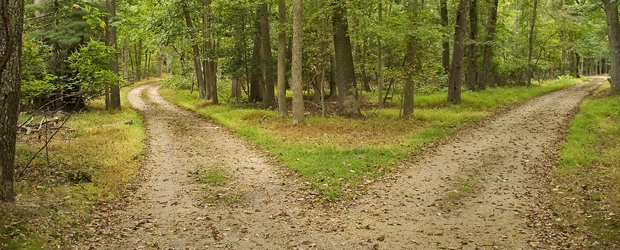
The next piece of work I would like to write about is "The Road Not Taken" by Robert Frost. Many people are aware of this poem because it is usually taught in our school systems, I believe this is defiantly justified. This poem may not seam to be very patriotic but lets consider something that we do differently in the United States. In many other societies we have our profession chosen for us and our society is very collective in that we work as a group instead of putting emphases on the our selves. Here in the US we are extremely and uniquely individualistic which means that basically, our whole lives, we are taught to make decisions for our selves and our futures are never written in stone. We have the choice to be doctor, lawyer, or anything we want really. So how does this relate to the Poem? We all will come to a fork in the road where we will have to make a choice. The choice we make has many factors involved but sometimes we just pick the easy road. But the best things in the world come when we take to road less traveled and we get the opportunity to do something new or make a change. Next time you come to a fork in the road, try the hard way, it could be the most rewarding thing you do.

Link to Poem: http://www.poetryfoundation.org/poem/173536

Sunday, October 25, 2015

Ambrose Bierce, the Bitter Bierce

An Occurrence at Owl Creek Bridge


Lets consider Ambrose Bierce's work in american literature. One of my favorite pieces of his work is "An Occurrence at Owl Creek Bridge." Let's see how this story reinforces the argument that Bierce is defiantly one of the US's greatest authors. In the beginning of the story we see a man standing on a bridge with his hands tied waiting to be executed by soldiers of the North. The character suddenly hears a ringing noise and thinks about how he could escape from his noose. We finish the section with the men given the ok to execute. We then cut to a different scene and learn that the man in question, a Mr. Farquhar, always wanted to serve the south but was unable to due to some kind of handicap. He caches word that the north is on the move and learns that one could easily destroy the bridge into the area. We then cut to the execution were we see Mr. Farquhar make his escape after he is dropped from the bridge, something went wrong and the noose didn't hold. He runs and makes it to his family but he feels a sharp pain in his neck and everything goes white. In reality he died at Owl Creek Bridge. This is an amazing story with an awesome surprise ending. Lets look at how Mr. Bierce pulled of the amazing story. Lets consider one of the many themes in the story. One of the most prominent is the allusion of illusion and reality. As readers we truly believed that the man escaped but in the end it was an illusion. This make one wonder how much of this story was an illusion or a really. This also makes us wonder about illusions in our lives. There is also a great deal of symbolism in this story. An example would be the driftwood he sees flowing down the river this represents his impending doom in that he cannot escape and float down the river. There are many more themes and symbolic items in this story. I recommend you read it and see for yourself just how impressive this story is. The nature of the story is exactly what makes Ambrose a great American Author.

Link to story:http://americanliterature.com/author/ambrose-bierce/short-story/an-occurrence-at-owl-creek-bridge
Image fromhttp://www.returnofkings.com/52669/an-occurrence-at-owl-creek-bridge-on-the-beauty-of-life#prettyPhoto/2/

Saturday, October 24, 2015

Emily Dickinson, The Belle of Amherst

Because I could not stop for Death

Because I could not stop for Death –
He kindly stopped for me –
The Carriage held but just Ourselves –
And Immortality.

We slowly drove – He knew no haste
And I had put away
My labor and my leisure too,
For His Civility –

We passed the School, where Children strove
At Recess – in the Ring –
We passed the Fields of Gazing Grain –
We passed the Setting Sun –

Or rather – He passed Us –
The Dews drew quivering and Chill –
For only Gossamer, my Gown –
My Tippet – only Tulle –

We paused before a House that seemed
A Swelling of the Ground –
The Roof was scarcely visible –
The Cornice – in the Ground –

Since then – 'tis Centuries – and yet
Feels shorter than the Day
I first surmised the Horses' Heads
Were toward Eternity –

Emily Dickinson
1830-1886

What an interesting poem. There is something odd about this poem that many people miss. Consider the tone that we see in poems that have such a strong theme of death. The tone we usually see is very grim and sad but in this poem we get more of a scene of death being an old friend riding with us always ready to take us at the right time. Lets also consider how the reader interprets the poem. When I read the poem is seems like it started slow and ended with me reading really fast, then it slows down again. Some has said that this is symbolic of real life and how it starts slow and ends so fast. If we look at this poem from an analytical standpoint it would seem difficult to read but all of these different elements and literary devises that she has incorporated make it so comprehendible. This is truly what makes her such a great author in our history.

Link to poem: http://www.poetryfoundation.org/poem/177119


Friday, October 23, 2015

Walt Whitman, an American Patriot

O Captain, My Captain

O Captain! my Captain! our fearful trip is done,
The ship has weather’d every rack, the prize we sought is won,
The port is near, the bells I hear, the people all exulting,
While follow eyes the steady keel, the vessel grim and daring;
                         But O heart! heart! heart!
                            O the bleeding drops of red,
                               Where on the deck my Captain lies,
                                  Fallen cold and dead.

O Captain! my Captain! rise up and hear the bells;
Rise up—for you the flag is flung—for you the bugle trills,
For you bouquets and ribbon’d wreaths—for you the shores a-crowding,
For you they call, the swaying mass, their eager faces turning;
                         Here Captain! dear father!
                            This arm beneath your head!
                               It is some dream that on the deck,
                                 You’ve fallen cold and dead.

My Captain does not answer, his lips are pale and still,
My father does not feel my arm, he has no pulse nor will,
The ship is anchor’d safe and sound, its voyage closed and done,
From fearful trip the victor ship comes in with object won;
                         Exult O shores, and ring O bells!
                            But I with mournful tread,
                               Walk the deck my Captain lies,
                                  Fallen cold and dead.
Walt Whitman
March 9, 1887

This poem contains a enormous amount of symbolism, in fact this poem has nothing to do with a real ship or a real captain. The ship is symbolic of the United States of America and the captain is President Abraham Lincoln. Why in the poem does it speak of the captain falling? Because this poem is about the assassination of one of our countries greatest leaders. When one starts diving into the many different literary works by Walt, it not long before you will begin to notice a theme present in almost every one of them. The theme that we start noticing is patriotism. This is very prevalent in "O Captain! My Captain!" This poem is full of mourning like when he says "The ship has weather'd every rack, the prize we sought is won." Walt is morning the loss and praising the president and our country. Basically he is saying that Lincoln lead the ship through the fight and helped our ship win the prize. When the poem says, "The ship is anchor'd safe and sound, its voyage close and done," This explains that Lincoln set course of the future and left us safe and sound. These many different literary devises really show us how great of an author Walt Whitman was. I am proud that we have amazing patriots like him in our history.


Link to poem: http://www.poetryfoundation.org/poem/174742